
Radical Generosity
How artists can lead the way

Artists have a unique responsibility. They stand in the doorway of perception in the realm of possibility.
Many people watch great artists in awe of their ability to transmit euphoric, imaginative, or transcendent realities. The responsibility of the messenger is at least as large as their influence. However, that influence often warps the potential of art’s impact through the artist’s own shifting goals.
Like anyone else, artists desire acceptance and security. Many artists set their eyes on an award or achievement that denotes success in their field: an Oscar, a Pulitzer Prize, a bestseller’s list, a platinum plaque. These awards usually come after years of sacrifice and failure, where the struggle for relevancy meets the desire for acceptance. That desire is amplified when the artistic product comes from a very vulnerable place.
As I’ve written before, investors tend to capitalize on that vulnerability and lock artists in deals that are only mutually beneficial if the artist becomes one of the top selling in their field. Managers, labels, and executives force artists into contracts and gigs that raise their bottom line, meaning the artist has to make so much money to recuperate their growing production, marketing, and distribution costs. Climbing this ladder sadly perpetuates a cycle of destructive self absorption and consumption.
We’ve all heard the story thousands of times. Your favorite artist gets big, and they change. An aging rockstar laments that the money prevents him from having genuine relationships in his life. An actress can’t relate to the things that made her fall in love with acting, back when she was doing it while waiting tables. Money and fame are a deadly combination.
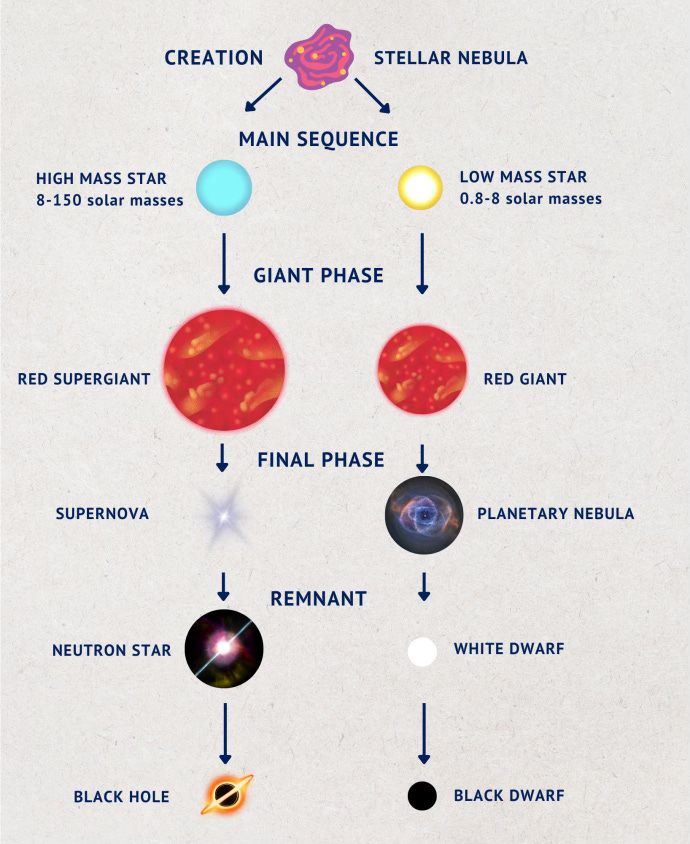
I’ll admit that I’m drawn to these stories. They crop up in my YouTube algorithm along with the stories of mind-bending drug binges that are part of that lifestyle. Each star goes through the same cycle: Nebula, Supergiant, Supernova, Black Hole. They rise so fast that they get the bends (nebula), then they dive in head-first, and their social circle changes. Suddenly they’re surrounded by yes-men, are high or drunk all the time, and can’t go in public anymore (supergiant). Their reality becomes warped, and if they live long enough, they come to the realization that the lifestyle is unsustainable (supernova). Even if they cut out the drugs, the fame is irreversible, and the money is much stickier fix. These stars are unable to return to normalcy. Their deified image becomes their reality, and they go to extreme lengths to make this shell the only remaining representation of their personhood. This is the black hole phase. To an observer like me, the cycle is predictable, but each time a celebrity goes through it, it’s new to them.
A peculiar and consistent aspect of this through-the-looking-glass journey is how money changed everything for many of these people. But it doesn’t take these blown-out hyperbolic stories for us to understand what’s going on. We see it happen to pretty much anybody.
Sadly, this cycle is associated with professional success, despite the consistent narrative that an artist’s music is usually more authentic or even “better” before the money and the fame. There’s a phrase in hip hop, that someone who is rapping their ass off is rapping “like the rent is due.” It’s part of a broader understanding that artists often get complacent when they’re well-fed. It’s almost as if their artistic sensibilities are related to a grounded honesty that is a function of 1) how real the relationships around them are and 2) how much money they have (which often influences the authenticity of relationships). If either of these two things go awry, the individual is likely to believe that they have a godlike power within them, and deserve sycophantic praise along with anything their heart desires. But as shown in the star chart above, there is another pathway for the life cycle of a star.
Stars that don’t enter the overconsumptive supernova stage will add mass to their core and eject the outer layer of their material. The interstellar material becomes a nebula that will go on to form new stars, and the compacted core will remain, maintaining its luminosity while slowly cooling over billions of years.
Great artists whose lives resemble the radiance and gravitational pull of a star can follow the same template. Instead of seeking an ever-increasing store of wealth and power, the artist can devote their excess to charitable causes. In fact, I would say it is their responsibility as their calling deals in reimagining the world. If more artists vowed early on in their career to assume a maximum salary, then anything above that salary could go to nonprofits and other creative projects that provide housing and opportunities for those who need it.
Say a particularly famous artist makes $10 Million in one year. If they choose to assume a comfortable maximum salary of $200K, then the $9.8 Million can go to charity. Some artists may have to pay out of pocket for some touring and marketing fees, complicating the concept. That’s fine. Each artist can make their own contributions out of the net profits and with the ratios that make sense to them. I suggest this idea because I think it is in line with the artistic initiative and will increase the artist’s longevity and quality of work. Even if they are in awful 10-year deals where shareholder desires dictate their creative output, artists can still have their agency, their empathy, their grounded sense of impact, and even their morals by choosing to be radically generous with the funds they gain from a dream job. After all, the dream job is the true compensation. Anything additional is a responsibility to publicly fill out the artistic vision.
One thing artists can do with their wealth is put it into a fund that eventually buys LiveNation, which is responsible for a large part of the extractive business relationships that artists suffer under. Although LiveNation has a huge market cap of $35.73 Billion, Celebrity Net Worth reports that the top 50 each of singers, rock stars, rappers, and DJs have a combined net worth of $46.22 Billion. If these artists devoted a portion of their wealth to buying LiveNation, they could free themselves and other artists from the deals that keep them from being remotely profitable unless they operate at the superstar level. The hope is that if artists owned their own visibility, they would run venues differently, compensating artists more. This would most likely decrease the valuation of LiveNation, but the idea is that they’re investing this money in the future of better deals for artists, not investing it in financial return.
I know that convincing the world’s wealthiest artists to buy LiveNation is an almost impossible sell, but it’s more of a thought exercise on the reality that there is actually enough money in the world to solve the problems that money causes. Chappel Roan used her Grammy speech to ask record labels to provide better deals for up and coming artists. I believe getting artists to view their financial gains as a social responsibility is an equally important part of the process.
The idea is that artists can lead the way to a larger movement. Artists have a massive amount of influence, and they largely use it to prop themselves up with a façade of luxury and unattainable access. In so doing, they are trying to solve their own problems of self-actualization, security, and acceptance. We all know that accruing more wealth will never accomplish this.
The Bible Project reported on two Harvard Business grads who chose to take pledges of extreme generosity to avoid this pitfall. Even King Solomon, who God Himself granted to be the wisest person to ever live, could not handle the abundance that he hoarded for himself through this wisdom. Although this wisdom should hypothetically prevent Solomon from falling down the pit of self-consumption, he is only human. Solomon used God’s wisdom to accrue 1,000 wives and impossible amounts of gold, all of which ultimately led to the destruction of Israel due to the improprietous relationships caused by this wealth accumulation.
The times call for radical change, which is best accomplished voluntarily. I for one am appalled by the impossible amount of wealth held by very few. Many clamor that we should tax the rich more, and I would agree, but I would rather the rich tax themselves. Kyla Scanlon wrote about how the robber barons of our first gilded age donated their wealth to charitable causes. Andrew Carnegie donated over 90% of his wealth before he died. Part of the reason he did this is because it was the expectation, but times have changed. Rather than holding billionaires accountable for the money we entrusted to them, we gawk at the rockets and yachts they buy.

When I see that the Eagles gave out $171,000 bonuses to each player following the Super Bowl, I wonder how much better our world would be if the franchise announced instead that they were building affordable housing with that money. When Instagram accounts post about the most expensive watches seen at the Super Bowl, I wonder what would happen if we stopped glorifying that show of wealth. Perhaps we could even convince those stars to sell half their jewelry and donate the proceeds to independent labels and unsigned artists who apply for a grant.
The government doesn’t do a great job with the money they raise from taxes. We could do much more if those who can afford to choose to live beneath their means and donate everything else to whatever causes they deem worthy. Donating the money while making it is also the best way to put it to work. While we certainly need this from billionaires, as Scanlon suggested, we need generosity from everyone. Each new car and house adds a diminishing amount of joy to the buyer. Rather than focusing on building an enviable life for oneself, the rich should focus on creating abundance for all. If prosperity is beauty and abundance, then the fact that our food lacks nutrition and our cities are ugly and congested means that we need to find a different way to use money. Why the wealthy complain about homelessness and education without strategically using their money to address these issues is beyond me. There is a pervasive idea that the good life lies behind a paywall. We desperately need to fix that.
We have the resources to create the world we desire. Those who imagine a better world are responsible for creating it. The reason I hone in on artists is because they make a living off of having a heightened sense of empathy. The bigger they get, the more they become corrupted, feeding the machine that chews up them and their successors. Breaking this cycle will take immense sacrifice, but so will any progress. And to those who find the notion of extreme generosity absurd, I ask: what is the money for?
Sold 🤣
Reminded of the O'Jays "for the love of money".
It's not just artists or the music industry.
Great article, thanks for writing 👍🏼